Tampilkan postingan dengan label GST. Tampilkan semua postingan

Kamis, 30 Agustus 2018

What is the implication of SST on financial products & services? (Aug 2018)

The Ministry of Finance has announced that 6% of Service Tax will come into effect in Malaysia on 1st September 2018, repealing the Goods and Services Tax (GST) which was first introduced as 6% on 1st April 2015 and further reduced to 0% on 1st June 2018.


Unlike GST which taxes all goods and services unless an exemption is provided, Service Tax is only charged on certain prescribed services made by prescribed taxable persons.


For Life Insurance products, Service Tax of 6% will be chargeable on the premiums of products below:


B2B (Business to Business) – Policies sold to an institution (where policyowner is an organization) or policies assigned to an institution (where assignee is an organization)


B2C (Business to Consumer) – Policies sold to an individual or policies assigned to an individual


For Employee Benefits products, Service Tax of 6% will be chargeable on the premiums of products below:


For General Insurance, the 6% Service Tax shall be charged on *all types of insurance contracts to cover any risks incurred in Malaysia to an individual or business organization *EXCEPT the areas listed in below.


How about those car insurance bought or renewed between June to August 2018?
Under the regulations, car insurance is subjected to a 6% tax. In this case, insurance companies can chase back the tax (although already renewed) for the period starting 1st Sept onwards on a pro-rate basis.


Not a popular one...
Provision of credit card or charge card services. A specific rate of tax of RM25 is imposed upon the issuance of principal or supplementary card and every subsequent year or part thereof.

No automatic alt text available.


How about investment via a unit trust (UT) scheme / private retirement scheme (PRS)?
Based on the Regulations, the services provided by asset and fund managers are excluded from the ambit of service tax. So, sales charge will not be subjected to service tax effective from 1st September 2018, which is good for the asset management industry.


How about share trading services?

Another beneficiary of SST implementation would be the capital market as well. Compared to GST, all share trading services will not be subjected to SST (although stamp duty still applies). Hopefully, more retail participation could be seen after 1st September 2018.

Minggu, 13 Mei 2018

Knowing the 5 'Avengers' of “Council of Elders” by Tun Mahathir


First of all, let us congratulates Pakatan Harapan (PH), lead by Tun Mahathir, coming with a beautiful victory over the ruling coalition Barisan Nasional (BN) on 9th May 2018. This is the 14th general election of Malaysia where Malaysians vote to decide who to lead the country forward. The mandate was given for 5 years, and Tun Mahathir scores the many history records on this beloved country and the world.

And, one of the first by the newly elected Prime Minister (PM) Tun Mahathir was by setting up a "council of elders" comprising 5 experts from various fields whom will serve as advisors to the new government in order to rectify the current 'troubled' economic problems of the country. Let us know the background of these 'Avengers' to save the country...


Tun Daim Zainuddin
  • Former finance minister (1984 - 1991) under the same boss Tun Mahathir as PM then.
  • Also, he is a businessman and politician, especially during the new economic policy (NEP) era.
  • Came back to the office as finance minister after the 97/98 Asian financial crisis to help out Tun Mahathir once again. (1999 - 2001)
  • Instrumental in implementing the "Look Far Eastern Policy" in 1980s, successfully transforming the local working culture (punch card system) and attracting Japanese corporations to set up factories/businesses here, modernizing the local manufacturing sector.
Tan Sri Zeti Akhtar Aziz
  • The longest-serving former Bank Negara Governor. (2000 - 2016)
  • Named as world's best central bank chiefs in 2009 by Global Finance magazine.
  • Accorded “Grade A” among the heads of central banks for the 10th time by the Global Finance magazine in 2013.
  • Chairman of the Asian Institute of Finance.


Tan Sri Hassan Merican
  • Former Petronas CEO who oversees the national oil giant which is one of the main income sources for the country. (1995 - 2010)
  • Chairman of SembCorp Industries Ltd (since 2010) & SembCorp Marine Ltd (since 2014).
  • Director of ConocoPhillips (2013 - 2015)
  • Chairman of Singapore Power, Pavilion Energy, Pavilion Gas and Lan Ting Holdings and holds directorships in Sarawak Energy, Lambert Energy Advisory and MH Marican Advisory.
  • He is also a senior international advisor at Temasek International Advisors.


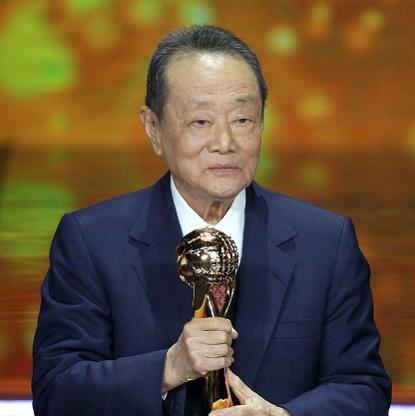
Robert Kuok
  • A tycoon who was the richest person in the country, having a business empire which spanning from sugarcane plantations (Perlis Plantations Bhd), sugar refineries, flour milling, animal feed, oil, mining, finance, hotels, properties, trading, freight, and publishing.
  • The biggest source of wealth is his stake in Wilmar International, the world's largest listed palm oil company.
  • According to Forbes, his net worth is estimated at $15.2 billion on May 2018.
  • His book 'Robert Kuok, A Memoir' published late 2017 stir a debate after it contains Kuok’s frank views on Chinese in South-East Asia, his dealings with Malaysia’s former premiers, his take on Malaysia’s economic policies.


Prof Jomo Kwame Sundaram
  • A prominent Malaysian economist.
  • Served as the United Nations Assistant Secretary-General for Economic Development. (2005 - 2012)
  • Visiting Senior Fellow at Khazanah Research Institute.
  • Visiting Fellow at the Initiative for Policy Dialogue, Columbia University.
  • Adjunct Professor at the International Islamic University, Malaysia.
  • Before the Asian financial crisis in 1997–98, Jomo was an early advocate of appropriate new capital account management measures, which then PM Mahathir later introduced.

Speaking to Bernama after their first meeting, Tun Daim said the five-member team was briefed and deliberated on the current economic situation, the national debt, the ringgit, GST and fuel subsidies, among others.


Tun Daim said the council would be calling the Public Private Partnership Unit, which is under the Prime Minister's Department, related ministries and government-linked companies (GLCs) to brief them on various mega projects and the governance of GLCs, including Lembaga Tabung Haji (LTH), Majlis Amanah Rakyat (Mara), and the Federal Land Development Authority (FELDA).

Meanwhile, Tun Daim said the team would hold meetings daily for 100 days, and in fact, on some days, it would be a few times a day. Thereafter, their job was done.